
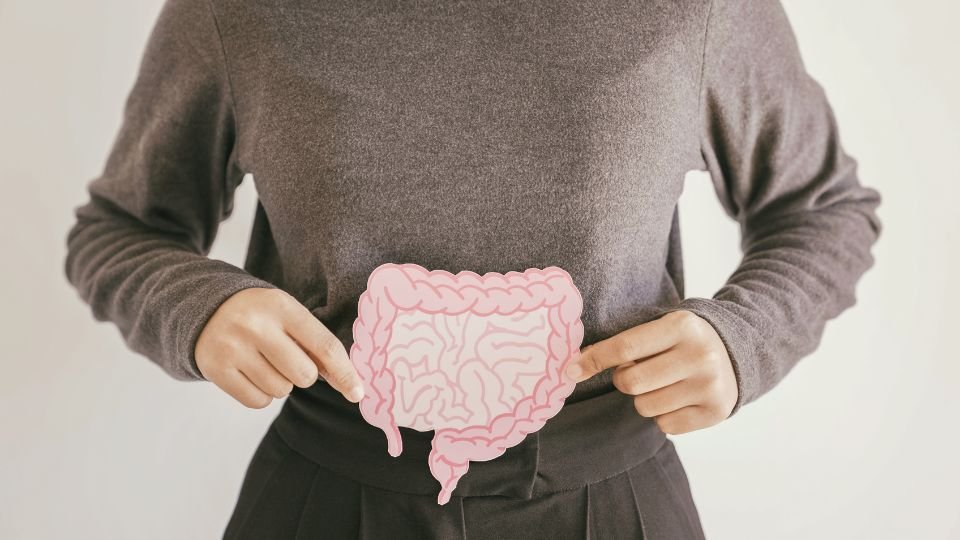
The GI-MAP is an at-home stool test that uses DNA testing (qPCR) to look for parasites, bacteria, fungi and H. pylori, and to measure markers of digestion, inflammation and gut immune activity. It can give useful clues when digestive symptoms don’t have an explanation. But it can’t diagnose a disease on its own, and it isn’t the right move for everyone.
One of the most common questions I get at Rachel Holistic Wellness is: “My tests came back normal, but I still feel off. Would a test like this show me something?” Here is what the GI-MAP measures, what it can’t tell you, how it works in Canada, and who it’s actually worth it for.
GI-MAP at a glance
- Full name
- GI Microbial Assay Plus
- Made by
- Diagnostic Solutions Laboratory, a lab in Georgia, USA
- Sample
- One stool sample, collected at home and mailed to the lab
- Method
- Quantitative PCR (qPCR), which detects and measures microbes by their DNA
- Ordered through
- A healthcare practitioner. The lab doesn’t sell tests to the public.
- Results
- About 7 to 10 business days after the lab receives your sample, according to the lab, plus shipping time
- Cost and coverage
- Private-pay. Provincial plans like OHIP don’t cover it.
What is the GI-MAP test?
GI-MAP stands for GI Microbial Assay Plus. It is a “functional” stool test, which means it looks at what is living in your digestive tract and how your gut is working, not only at whether there is a disease. Integrative and holistic practitioners often use it, including in my practice.
Instead of growing bacteria in a dish (culture) or looking for them under a microscope, it uses quantitative PCR. The lab looks for the DNA of specific organisms and measures how much of each is present. You collect one stool sample at home, mail it in, and the report comes back through your practitioner.
What does the GI-MAP test for?
The report covers a lot more ground than a typical stool test. These are the main sections, based on the lab’s own description of the test:
| Section | What it looks at | Why it can matter |
|---|---|---|
| Pathogens | Disease-causing bacteria, viruses and parasites, such as Campylobacter, Salmonella, C. difficile toxins, norovirus, Giardia and Cryptosporidium | Can explain ongoing diarrhea or cramping, especially if symptoms began after travel or food poisoning |
| H. pylori | The stomach bacterium, plus virulence factors (genes linked to how harmful a strain may be) and antibiotic-resistance genes | Linked to ulcers and, over time, stomach cancer risk. A positive result belongs with your doctor. |
| Beneficial bacteria | Levels of bacteria such as Bifidobacterium, Faecalibacterium and Akkermansia | Gives a picture of how diverse and balanced the gut community looks, though “ideal” is still being worked out |
| Opportunistic bacteria | Organisms such as Klebsiella that can cause problems when they overgrow | May contribute to gas, bloating or inflammation, but they’re also found in healthy people |
| Fungi and yeast | Candida and other yeasts | Best read alongside your symptoms, since yeast in stool is hard to interpret on its own |
| Digestion | Pancreatic elastase-1 (digestive enzyme output) and steatocrit (fat in the stool) | Low elastase or high stool fat can point to trouble digesting and absorbing food, which needs medical follow-up |
| Inflammation and immune activity | Calprotectin, EDN (a marker of eosinophil, a type of immune cell, activity), secretory IgA (your gut’s first-line antibody) and anti-gliadin IgA (an immune response to gluten protein) | Calprotectin is well studied for telling inflammatory bowel disease apart from non-inflammatory problems (van Rheenen et al., 2010). A high result needs medical follow-up. |
| Optional add-ons | Zonulin (a gut-permeability marker), stool gluten peptide and antibiotic-resistance genes | Zonulin results should be read cautiously (see below) |
Results are reported as numbers, called genome equivalents per gram of stool, and compared against the lab’s own reference ranges.
How is the GI-MAP different from a standard stool test?
Stool tests ordered by your doctor are built to answer urgent medical questions: is there an infection, bleeding or significant inflammation? They are the right first step when symptoms are severe, new or worrying. The GI-MAP asks a broader question.
| Standard stool tests | GI-MAP | |
|---|---|---|
| Main question | Is there an infection, bleeding or inflammation that needs treatment? | What is in my gut, and how is it working? |
| Typical methods | Culture, microscopy, antigen tests and, increasingly, PCR panels (Binnicker, 2015) | qPCR for a wide set of microbes, plus digestive and immune markers |
| What you get | A short list of targets, usually positive or negative | Dozens of targets with measured amounts, compared against the lab’s ranges |
| Ordered by | Your doctor or nurse practitioner | A practitioner who works with the lab |
| Cost | Covered by provincial plans when medically indicated | Private-pay |
| Best for | Diagnosing infections and disease | Finding clues when symptoms persist and the basics look normal |
The two aren’t rivals. Calprotectin, for example, is on the GI-MAP and is also something your doctor can order. If you have any of the warning signs listed below, start with your doctor.
What the GI-MAP can’t tell you
This is the part that often gets left out, so I’ll be direct.
- It can’t diagnose a disease. A GI-MAP can point toward something worth investigating, but conditions like inflammatory bowel disease, celiac disease and SIBO are diagnosed with other tests. Celiac disease, for example, is diagnosed with blood tests for celiac-specific antibodies plus a biopsy of the small intestine, done while you’re still eating gluten (ACG guideline, 2013). A stool anti-gliadin result is not a substitute.
- A “positive” isn’t always the cause of your symptoms. PCR picks up DNA, including from organisms that are present but not causing problems, and from traces of past exposure. In one study of 204 healthy adults, about two in three tested positive for at least one pathogen on a stool PCR panel (Su et al., 2026), and researchers have cautioned that PCR positives can be hard to link to symptoms (Frickmann et al., 2015). The lab’s own sample report says the same thing: not everyone with a positive finding has symptoms.
- Stool isn’t the small intestine. Stool mostly reflects the large intestine, so it can’t confirm SIBO, which happens in the small bowel. SIBO is usually assessed with breath testing, and that has its own accuracy problems (Shah et al., 2026).
- The “normal” ranges are the lab’s own. The GI-MAP is a lab-developed test, so the lab sets its own reference ranges. Researchers note that a healthy microbiome still isn’t precisely defined (Bäckhed et al., 2012), so a result outside the range is a reason to ask questions, not a verdict.
- Some markers are less clear-cut than they look. Commercial zonulin tests may not be measuring zonulin at all (Ajamian et al., 2019), and stool elastase is better at ruling out pancreatic insufficiency than confirming it, with false positives more likely when your risk is low (Vanga et al., 2018). For more on gut permeability, see What Is Leaky Gut?.
- It’s a snapshot. Most of the research supports individual markers, such as calprotectin or specific pathogens. What is less established is whether guiding care with a whole panel leads to better outcomes than standard care. Results can also shift with diet, antibiotics, travel and stress, so treat the report as one input, not the final word.
Is the GI-MAP test worth it?
It can be, for the right person at the right time. This is how I think about it.
It may be worth considering if…
- You have ongoing digestive symptoms, like bloating, constipation, loose stools or gas, and your doctor’s basic tests came back normal
- Symptoms started after travel, food poisoning or antibiotics and never fully settled
- You have low iron that keeps coming back with no clear cause
- You’ve already worked on the basics (regular meals, fibre, hydration, sleep, stress) and want more information to guide your next steps
- You’ll be working with a practitioner who can interpret the results alongside your history
It’s probably not the right move if…
- You have any of the warning signs listed below. See your doctor first.
- You feel well and are simply curious. Healthy people often have “abnormal” findings, which can cause needless worry.
- You haven’t tried the basics yet. They’re usually the first step, and testing works better on top of them.
- You’re hoping the result will diagnose celiac disease, IBD or SIBO. Other tests do that.
- The cost would be a real strain. A private-pay test only helps if you can act on the results.
In my constipation case study, I only ran a GI-MAP once her system was stable enough, which is a good example of testing being one step in the process, not the first one. It also uncovered H. pylori that had been depleting her iron.
How does GI-MAP testing work in Canada?
You can’t order a GI-MAP straight from the lab. It has to go through a practitioner. This is the usual process:
- A practitioner orders the kit. The lab doesn’t sell to the public, so testing goes through a healthcare practitioner who works with the lab.
- The kit is sent to you. It includes collection vials, instructions and a request form. Check the expiry date on the vials, because the lab may discard a sample received in an expired one.
- You collect one stool sample at home. It takes a few minutes. Your practitioner may give you extra instructions about medications or supplements before you collect.
- The sample goes to the lab in the US. Because it crosses the border, ask your practitioner how long shipping usually takes and whether there are extra fees.
- Results come back through your practitioner. The lab currently lists about 7 to 10 business days once it has your sample, so allow a few weeks in total once shipping is included.
- You review the results together. The report is long and technical. The real value is in the interpretation, in the context of your symptoms, history and other tests.
What does a GI-MAP cost in Canada, and is it covered?
Prices vary a lot between practitioners, so I won’t quote a number that may be out of date. What I can tell you is what makes up the cost:
- The lab’s fee for the test, plus any add-ons such as zonulin
- The practitioner’s fee for ordering and handling the kit, which each practitioner sets
- Interpretation. Some practitioners include a review appointment or plan, and others charge for it separately
- Shipping and currency. The lab is in the US, so check whether the price is in CAD or USD and whether shipping is included
Before you book, ask for an itemized quote that spells out what is included. A lower price isn’t a better deal if it leaves you holding a report with nobody to explain it.
It is a private-pay test. Provincial plans like OHIP don’t cover it, and the lab isn’t contracted with insurance companies. Whether an extended health plan reimburses any part of it depends on your plan and on who orders it, so call your insurer before you book and ask exactly what is covered.
Testing as part of working with me
The GI-MAP lab and an expert review of your results are included in The Bloat Fix Method, my 4-month program for busy moms. In the Foundational Reset, functional lab testing is optional and can be added if it would help.
What happens after you get your results?
A GI-MAP report is long, and most of it will look unremarkable for most people. A good review focuses on a few things: findings that need medical follow-up (like H. pylori, C. difficile toxins, a high calprotectin or a low elastase), patterns that fit your symptoms, and what to tackle first.
Sometimes that means sharing a result with your doctor. Sometimes it means working on food, stress and digestion before anything else. H. pylori, in particular, is treated with a specific course of antibiotics under medical guidelines (ACG, 2024), so it’s a result to bring to your doctor, not something to treat on your own.
In The Bloat Fix Method, we start with functional testing and build a plan from there. If bloating is your main symptom, my guide to the root causes of bloating is a good place to start before you spend money on testing.
When to see your doctor first
Get medical care before, or instead of, functional testing if you have:
- Blood in your stool, or black, tarry stools
- Unexplained weight loss
- Diarrhea or vomiting that won’t settle
- Severe or worsening abdominal pain
- Fever along with digestive symptoms
- Trouble swallowing
- New changes in your bowel habits, especially over age 50
- A family history of bowel cancer, inflammatory bowel disease or celiac disease
Frequently asked questions
Is the GI-MAP test accurate?
The method, qPCR, is a sensitive way to detect DNA, which is why it picks up so much, including organisms that aren’t causing any problems. Many individual markers, like calprotectin, have solid research behind them. What’s harder is interpreting a result for one person, because detecting DNA doesn’t prove an organism is behind your symptoms, and the reference ranges are the lab’s own.
Do I need a referral to get a GI-MAP in Ontario?
You can’t order it yourself, because it has to be ordered through a practitioner. You generally don’t need a referral from your family doctor to see a private holistic nutritionist or naturopathic doctor, but ask whoever you choose who will order the test and who will interpret it.
Can the GI-MAP diagnose leaky gut?
No. There’s no accepted test that diagnoses “leaky gut,” and zonulin, the marker offered as an add-on, has measurement problems. See What Is Leaky Gut? for what the research does and doesn’t show.
Can the GI-MAP diagnose SIBO?
No. SIBO happens in the small intestine, while stool mostly reflects the large intestine. SIBO is usually assessed with a breath test, which also has limitations, so it’s worth talking it through with your doctor.
Can the GI-MAP tell me which foods I’m sensitive to?
No. It doesn’t test for food reactions. I explain why I don’t rely on food sensitivity tests in Gluten, Dairy & Your Gut.
How long do GI-MAP results take?
The lab currently lists about 7 to 10 business days after it receives your sample. Add shipping each way, and your practitioner’s time to review the report, and a few weeks in total is a reasonable expectation.
Not Sure Whether Testing Makes Sense for You?
I help women, especially busy moms, work out what to do first. Book a free call and we’ll talk through your symptoms and the best next step.
Book Your Free Gut Strategy CallSources
- Diagnostic Solutions Laboratory. GI-MAP test information, product brief, patient FAQs and sample report. Accessed November 2026.
- van Rheenen PF et al. Faecal calprotectin for screening of patients with suspected inflammatory bowel disease: diagnostic meta-analysis. BMJ, 2010. PubMed
- Vanga RR et al. Diagnostic performance of measurement of fecal elastase-1 in detection of exocrine pancreatic insufficiency. Clin Gastroenterol Hepatol, 2018. PubMed
- Su H et al. Detection and assessment of fecal carriage of gastrointestinal pathogens in healthy community adults. BMC Infect Dis, 2026. PubMed
- Frickmann H et al. PCR for enteric pathogens in high-prevalence settings. What does a positive signal tell us? Infect Dis, 2015. PubMed
- Binnicker MJ. Multiplex molecular panels for diagnosis of gastrointestinal infection. J Clin Microbiol, 2015. PubMed
- Ajamian M et al. Serum zonulin as a marker of intestinal mucosal barrier function: may not be what it seems. PLoS One, 2019. PubMed
- Bäckhed F et al. Defining a healthy human gut microbiome: current concepts, future directions, and clinical applications. Cell Host Microbe, 2012. PubMed
- Rubio-Tapia A et al. ACG clinical guidelines: diagnosis and management of celiac disease. Am J Gastroenterol, 2013. PubMed
- Chey WD et al. ACG clinical guideline: treatment of Helicobacter pylori infection. Am J Gastroenterol, 2024. PubMed
- Shah A et al. Critical review: the past, present, and future of small intestinal bacterial overgrowth (SIBO). JGH Open, 2026. PubMed
This article is for education only and isn’t medical advice, diagnosis or treatment. Seek medical care for severe, new or worsening digestive symptoms, such as blood in your stool, unexplained weight loss, persistent vomiting or severe pain. Talk to your healthcare team before making changes if you’re pregnant, take medication or have a medical condition.
Last updated: November 2026 | Written by Rachel Einbinder, Certified Holistic Nutrition Practitioner