
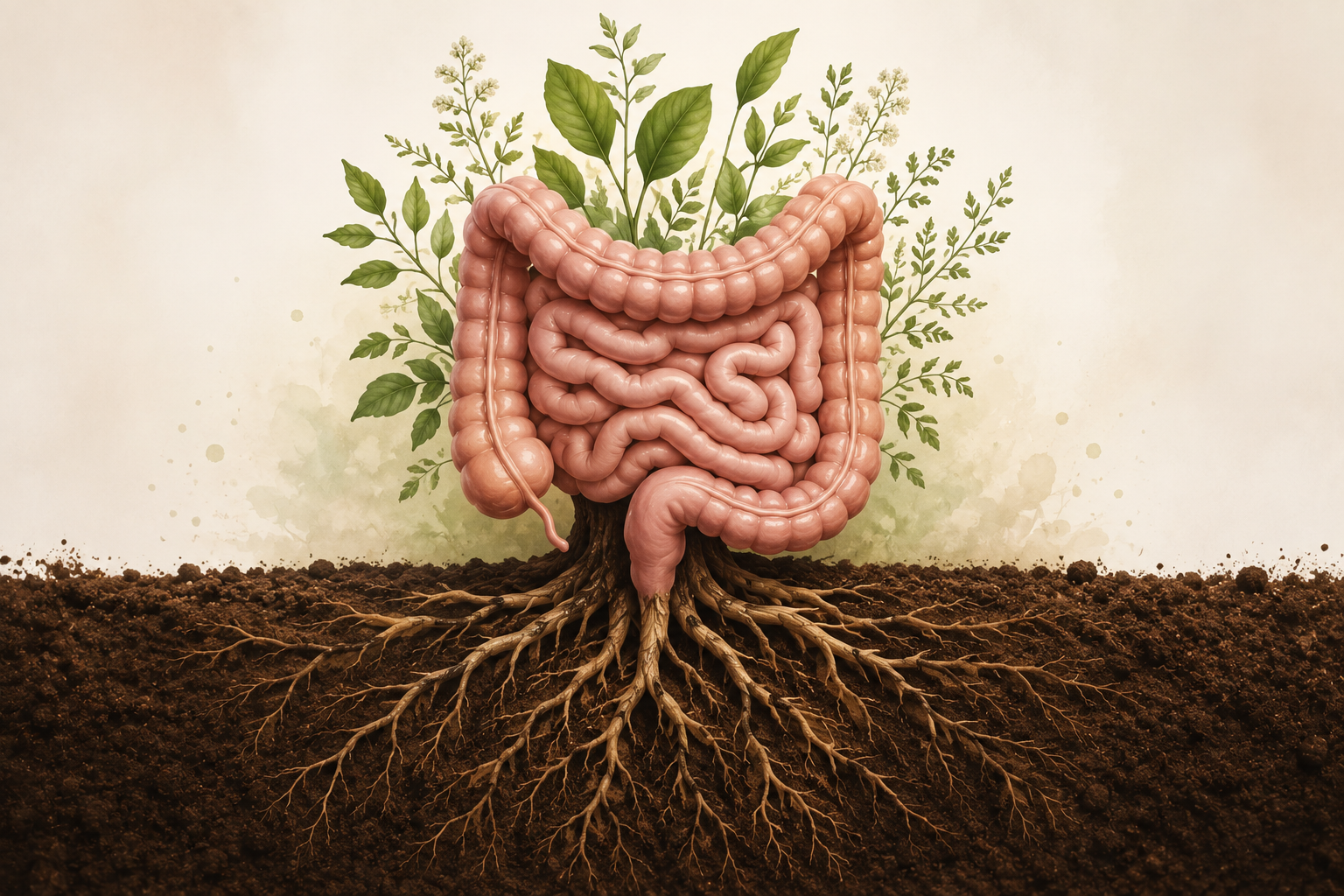
The Root Causes of Bloating That Most Doctors Miss
Chronic bloating is not normal — even if you’ve been told it is. If you find yourself unbuttoning your pants after every meal, waking up with a flat stomach only to balloon by dinner, or avoiding social plans because you don’t want to feel “fat” in your clothes, you’re not alone — and more importantly, you’re not broken. Bloating is a symptom, and like any symptom, it has an underlying cause.
The problem is that most standard medical workups don’t look for those underlying causes. You might hear “it’s just IBS,” “eat more fiber,” or “try probiotics” — when in reality, the root cause could be anything from a bacterial imbalance to a missing digestive enzyme to a gut infection you’ve been carrying for years.
As a holistic nutritionist in Toronto who works with women who have been bloated for years — often decades — here are the root causes I see most frequently that conventional testing misses.
1. Small Intestinal Bacterial Overgrowth (SIBO)
SIBO occurs when bacteria that normally live in your large intestine migrate up into your small intestine, where they don’t belong. These misplaced bacteria ferment the food you eat — especially carbohydrates — producing hydrogen, methane, or hydrogen sulfide gas. The result? Severe bloating that appears within 30-90 minutes of eating, often accompanied by burping, abdominal distension, and discomfort.
SIBO is one of the most common root causes of chronic bloating, yet it’s rarely tested for in conventional medicine. A standard breath test can diagnose it, but many doctors don’t order it. Research published in Clinical and Translational Gastroenterology estimates that up to 60% of people diagnosed with IBS actually have SIBO as the underlying driver.
Key sign SIBO might be your issue: Bloating that starts within an hour of eating and worsens throughout the day. You feel better if you skip meals or eat very low-carb.
2. Gut Dysbiosis (Imbalanced Microbiome)
Your gut is home to trillions of bacteria that should exist in a balanced ecosystem. When that balance shifts — too many of the wrong bacteria, not enough of the beneficial ones — it’s called dysbiosis. An imbalanced gut produces more gas, triggers inflammation, and struggles to break down food properly.
Dysbiosis can be triggered by antibiotics, chronic stress, a diet high in processed foods, or even a single food poisoning event. The imbalance itself can then become a self-perpetuating cycle — the wrong bacteria thrive, produce gas, damage the gut lining, and make it harder for beneficial bacteria to recover. Understanding what gut health actually means is the first step to identifying whether dysbiosis is driving your symptoms.
Key sign dysbiosis might be your issue: Bloating that varies with what you eat, plus other symptoms like irregular bowel movements, fatigue, and food sensitivities that seem to shift over time.
3. Low Stomach Acid (Hypochlorhydria)
Low stomach acid sounds like a good thing — less acid, less heartburn, right? Actually, the opposite is true. You need strong stomach acid to break down protein, absorb nutrients like B12 and iron, and kill pathogens that enter your digestive tract. When stomach acid is too low (a condition called hypochlorhydria), food sits in your stomach longer than it should, ferments, and produces gas that causes bloating and burping.
Ironically, many people take acid-suppressing medications (PPIs like omeprazole) for heartburn, but the root cause of their heartburn is actually low stomach acid — the lower esophageal sphincter relaxes because food isn’t being broken down properly, allowing what little acid is present to splash upward.
This is also why low iron is so common in people with digestive issues — you need sufficient stomach acid to absorb iron from food.
Key sign low stomach acid might be your issue: Bloating soon after eating, a feeling of fullness that lasts for hours, undigested food in stool, and nutrient deficiencies (especially iron and B12).
4. Gut Infections (H. pylori, Parasites, Candida)
Chronic bloating can be caused by stealth infections that standard stool tests don’t always catch. The most common culprits include:
- H. pylori: A bacterium that infects the stomach lining and can cause bloating, reflux, and nausea. It’s estimated that up to 50% of the global population carries H. pylori, but many people are asymptomatic. For others, it causes persistent digestive issues that don’t respond to diet changes alone.
- Parasites: Blastocystis hominis, Dientamoeba fragilis, and Giardia are more common than most people realize. These parasites can be picked up from contaminated water, undercooked food, or travel, and they can live in your gut for years, causing bloating, gas, and irregular bowel movements.
- Candida overgrowth: An overgrowth of yeast in the gut can produce gas and bloating, along with sugar cravings, brain fog, and recurrent yeast infections.
Standard lab work at your doctor’s office won’t test for most of these. A comprehensive functional stool test like the GI-MAP is designed specifically to catch these hidden infections, along with markers for digestion, absorption, and inflammation.
Key sign a gut infection might be your issue: Bloating that feels constant, not just meal-related. You may also have traveled recently, had food poisoning that “never fully resolved,” or deal with unexplained fatigue and brain fog.
5. Food Sensitivities and Histamine Intolerance
Food sensitivities are different from food allergies. An allergy triggers an immediate, often severe immune response (IgE). A food sensitivity triggers a delayed immune response (IgG) that can appear 24-72 hours after eating the trigger food — making it incredibly difficult to identify without proper testing.
The most common food sensitivities I see in my practice are gluten and dairy. But when the gut lining is compromised — something called leaky gut (intestinal permeability) — you can develop sensitivities to almost any food, including foods you’ve eaten without issue for years.
Histamine intolerance is another overlooked cause. Certain foods (aged cheese, fermented foods, alcohol, cured meats) are high in histamine. If your body doesn’t produce enough DAO — the enzyme that breaks down histamine — eating these foods can cause bloating, headaches, hives, and nasal congestion within minutes to hours.
Key sign food sensitivities might be your issue: Bloating that comes and goes, often delayed by a day. You may notice patterns like bloating after wine, hard cheese, or bread — but it’s inconsistent enough that you can never pinpoint the exact trigger.
6. Gallbladder and Bile Flow Issues
Your gallbladder stores bile — a digestive fluid produced by your liver that’s essential for breaking down fats. When bile flow is sluggish or the gallbladder isn’t functioning optimally, fats aren’t digested properly. This leads to bloating, nausea, and fatty or floating stools, especially after higher-fat meals.
Gallbladder issues are particularly common in women over 35 — the same demographic I see most often in my practice. Having had your gallbladder removed doesn’t mean the problem is solved either; many people continue to experience bloating and fat malabsorption after surgery because the liver still needs to produce and release bile effectively.
Key sign gallbladder issues might be your issue: Bloating specifically after fatty meals, nausea, right-sided abdominal pain or discomfort, and light or floating stools.
7. Chronic Stress and Nervous System Dysregulation
The gut-brain axis is a two-way communication highway. Chronic stress keeps your nervous system stuck in “fight or flight” mode. In this state, digestion is deprioritized — blood flow is redirected away from your digestive organs, stomach acid production drops, and gut motility slows down.
This is why you can eat the cleanest diet in the world and still experience bloating if your nervous system isn’t regulated. Your body quite literally can’t digest food effectively when it believes it’s under threat. For busy moms juggling work, kids, and a never-ending to-do list, this is often the missing piece of the puzzle.
Key sign stress might be your issue: Bloating that’s worse during high-stress periods, even when your diet is “perfect.” You may notice you digest food better on vacation or weekends, even if you’re eating similar things.
How to Find Your Root Cause
If you’ve been bloated for months or years, don’t expect to figure this out in a single Google search. The root cause of bloating is rarely one thing — it’s usually a combination of factors that need to be addressed in the right order.
The most effective approach I’ve found with my clients is a structured, layered protocol:
- Remove the obvious triggers (processed foods, alcohol, known irritants)
- Test strategically — not blindly. A GI-MAP breath test for SIBO and comprehensive bloodwork give you data instead of guessing
- Address the specific root causes identified by testing
- Support your body’s natural healing processes with targeted nutrition
- Rebalance your nervous system — because digestion can’t heal in a stressed state
This is exactly what I do with every client in The Bloat Fix Method — a 4-month program designed specifically for busy women who are tired of being bloated and ready to find the root cause. We start with functional testing to identify exactly what’s going on in your gut, then build a personalized protocol that fits your life.
You don’t need to have all the answers today. You just need to start looking — because the root cause is there, and it is fixable.
Last updated: July 2026 | Written by Rachel Einbinder, Certified Holistic Nutritionist
—