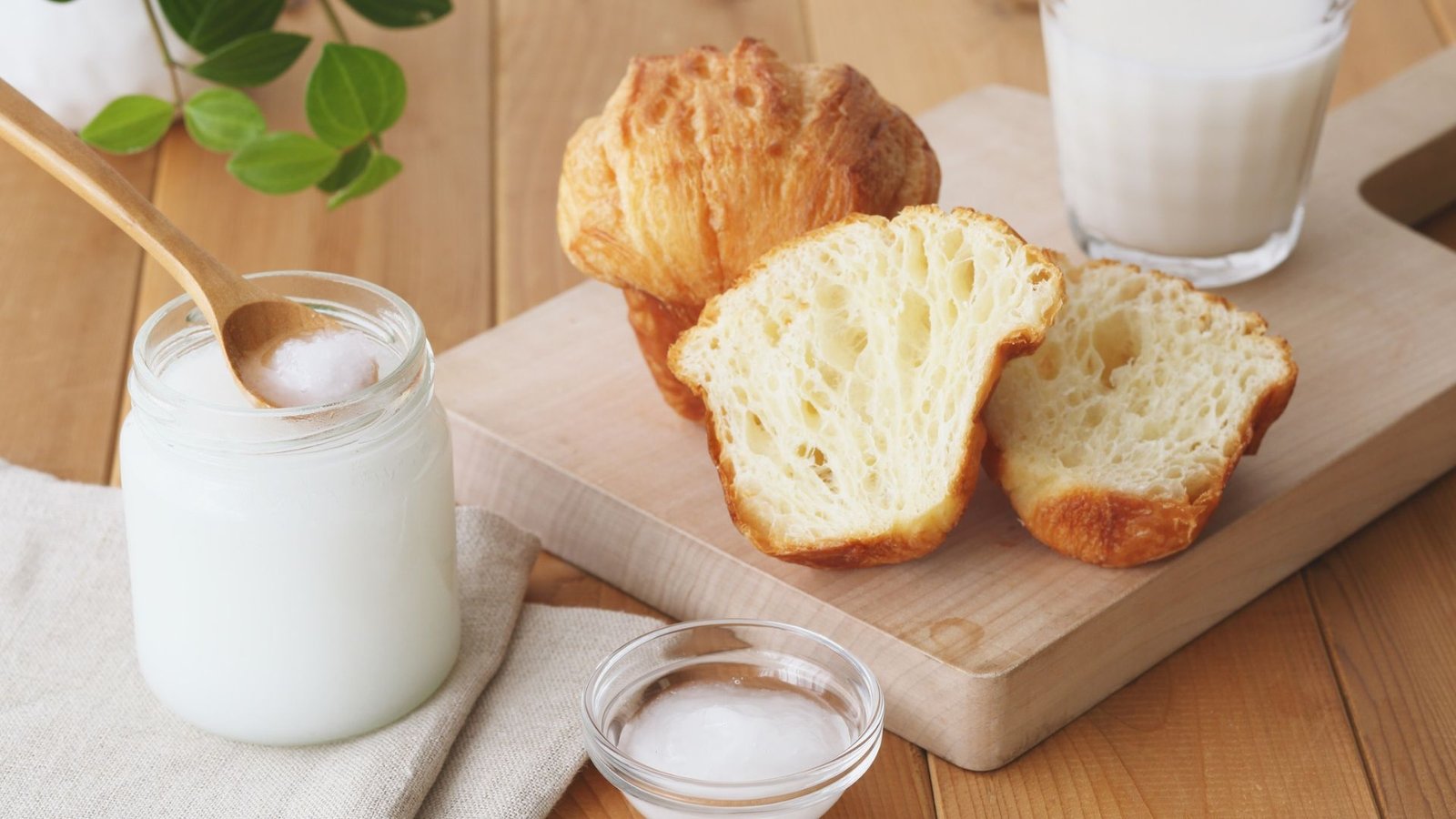
If you’re a busy mom who’s ever wondered why you’re suddenly bloated after breakfast — or why dairy or cheese leaves you feeling puffy, foggy, or “food baby” full — you’re not alone.
Gluten and dairy are two of the most common foods people point to when they feel off, but in my experience, the real issue usually isn’t the food itself. It’s what’s happening inside your gut.
🦠 It’s Usually a Leaky Gut Issue (Not Just the Food)
If you once tolerated gluten or dairy without a problem and now react to them, that’s often a sign your gut barrier has become more permeable — what we call “leaky gut.”
When the gut lining is compromised (from stress, inflammation, medications, infections, or poor digestion), tiny food particles can “leak” through the gut wall and trigger your immune system. The result? Bloating, fatigue, skin flare-ups, mood swings, or that heavy, inflamed feeling after meals.
So often, it’s not that your body suddenly forgot how to digest gluten or dairy — it’s that your gut is asking for help.
🌾 Gluten & Dairy: What’s Really Going On
Gluten is a mix of proteins found in wheat, barley, and rye.
For many people it’s fine, but when the gut is inflamed or bacterial balance is off, gluten can irritate the intestinal lining and worsen permeability.
Dairy (milk, yogurt, cheese) contains lactose and casein — two components that can be hard to process when your gut is already stressed.
Some people don’t produce enough lactase (the enzyme that breaks down lactose), while others react to casein, a protein that can trigger inflammation when the gut lining is fragile.
So when someone says, “I can’t do dairy anymore,” I always ask: what’s the state of your gut right now?
💚 What I See in Practice
For most of my clients, once we work on rebuilding gut integrity, supporting digestion, and balancing their microbiome, they can often tolerate gluten and dairy again — at least in moderation.
That’s the beauty of root-cause work: when the gut is healthy, it becomes more resilient.
🧀 Do I Make My Clients Give Up Gluten & Dairy?
The honest answer: it depends.
Here’s how I approach it in my practice:
✅ If we’re working on calming inflammation or stabilizing digestion, temporarily removing gluten or dairy can give your gut a chance to heal.
✅ If you already know you react strongly to these foods, it’s best to avoid them for now.
✅ If your functional stool test (like a GI-MAP) shows candida overgrowth, we often remove them short-term to help rebalance the microbiome and stop feeding the yeast.
✅ If you have an autoimmune condition, eliminating gluten (and sometimes dairy) can be a no-brainer step to reduce immune activation.
But for others — especially those without clear reactivity — I find that over-restriction can become part of the problem.
Most people I work with are actually undernourished, not overexposed. My focus is always on rebuilding — eating real, unprocessed, nutrient-dense foods and following my Protein–Fat–Fiber framework to balance blood sugar, support hormones, and fuel your metabolism.
🧪 About Food Sensitivity Tests (and Why I Don’t Rely on Them)
Food sensitivity tests measure IgG antibodies — immune markers your body produces when it recognizes a food. On paper, it sounds like a great way to pinpoint problem foods… but here’s the thing:
🧠 These tests measure exposure, not inflammation.
That means they tend to flag the foods you’ve eaten most recently or most frequently.
If you’ve had eggs, almonds, or blueberries several times this week, they’ll likely show up as “reactive” — even if they’re not causing symptoms.
More importantly, a long list of “reactive” foods usually signals that your gut lining is leaky, allowing food particles to slip into the bloodstream and trigger antibody responses.
In other words, food sensitivities are often a side effect of gut dysfunction, not the root cause.
When we repair the gut barrier and calm the immune system, many of those sensitivities fade — and your food freedom returns.
🌿 The Bottom Line
Gluten and dairy can absolutely contribute to symptoms — but for most people, they’re messengers, not the main problem.
Instead of fearing food, focus on supporting your gut so it can do its job again: digesting, absorbing, and protecting.
When you nourish deeply, rebuild your foundation, and listen to your body’s signals, you move from restriction to resilience — and that’s real healing.💚 If you’re ready to stop guessing which foods are “safe” and start getting to the root of your gut symptoms, that’s exactly what I help women do every day.guessing to clarity, I’m here to help you make it happen.